In a Finnish study using Neurosonic technology, soluble proteins linked to Alzheimer's disease moved from the brain into the bloodstream.
The brain continuously produces metabolic byproducts and excess proteins that must be removed from brain tissue. For this purpose, the brain has its own cleansing system that carries unnecessary substances away from brain tissue. The system is especially active during sleep, but its function declines with aging.
This may also be relevant in memory disorders. In Alzheimer's disease, for example, a protein called beta-amyloid accumulates in the brain years before symptoms appear.
University of Oulu and Oulu University Hospital (OYS) led an international study that examined whether the movement of brain fluids and the clearance of soluble proteins could be accelerated externally.
The study combined nitroglycerin, a vasodilating drug, and low-frequency whole-body vibration produced using Finnish company Neurosonic's technology.
What did the study find?
In healthy volunteers, the level of soluble beta-amyloid proteins linked to Alzheimer's disease in the blood increased by more than 30 percent after treatment. According to the researchers, this suggests that proteins moved from the brain into the bloodstream – exactly the effect the treatment aimed for.
At the same time, changes were observed in brain MRI scans that support the researchers' interpretation of increased brain fluid movement.
Particularly interesting was that the effect was stronger in older participants.
The brain's cleansing system
The brain needs an efficient way to get rid of metabolic waste and excess proteins.
Brain fluid circulation helps with this task. The system is called the glymphatic system. It can be thought of as a kind of cleaning system for the brain, in which fluids move through brain tissue and help carry away unnecessary substances.
Cleansing is most active during sleep, especially deep sleep.
With aging, however, the system's function can weaken. At the same time, the brain's ability to remove soluble proteins, for example, declines.
This is of interest to Alzheimer's researchers, since beta-amyloid gradually begins to accumulate in the brain in the disease. Over the years, the protein can form amyloid plaques typical of Alzheimer's disease.
What was done in the study?
The study included 29 healthy volunteers aged 27–61.
The researchers combined two different ways of affecting fluid movement in the body:
- Nitroglycerin, a vasodilating drug that releases nitric oxide in the body.
- Low-frequency whole-body vibration produced with Neurosonic's technology, which produces mechanical stimulation in the body.
The purpose was to find out whether affecting blood vessel function and applying mechanical stimulation to the body could make brain fluids move more efficiently.
The effects were monitored using both brain MRI and blood samples.
What was found in the blood?
After the combination of the drug and vibration technology, more brain-derived proteins were found in the blood. After treatment, the concentrations of the soluble Alzheimer's-related beta-amyloids Aβ40 and Aβ42 in the blood increased by more than 30 percent.
The amount of a protein called GFAP also increased in the blood. GFAP is linked to the brain's supporting cells, and its blood levels can be measured to track changes occurring in the brain.
At the same time, changes were observed in brain tissue and cerebrospinal fluid on MRI scans.
Together, these findings support the researchers' interpretation that the combination of nitroglycerin and low-frequency whole-body vibration increased fluid movement and the transfer of small soluble proteins from the brain into the bloodstream.
However, not all the proteins studied behaved the same way. The levels of larger proteins in the blood did not increase correspondingly.
Why was age an interesting finding?
One of the study's most interesting findings concerned age.
The effect was stronger in older participants.
This is interesting because aging is precisely what weakens the brain's ability to remove substances that accumulate in it. The risk of Alzheimer's disease, in turn, increases significantly with age.
Based on the study, it is not yet known why older participants responded more strongly. However, the finding gives reason for further research.
“The results offer a new perspective on how the movement of brain fluids and soluble proteins can be influenced. Next, it is important to find out why the effect appears to strengthen with age, and whether this mechanism could one day be relevant to brain health,” says Professor Vesa Kiviniemi, who led the study.
What was Neurosonic's role?
The mechanical vibration in the study was produced using technology developed by the Finnish company Neurosonic.
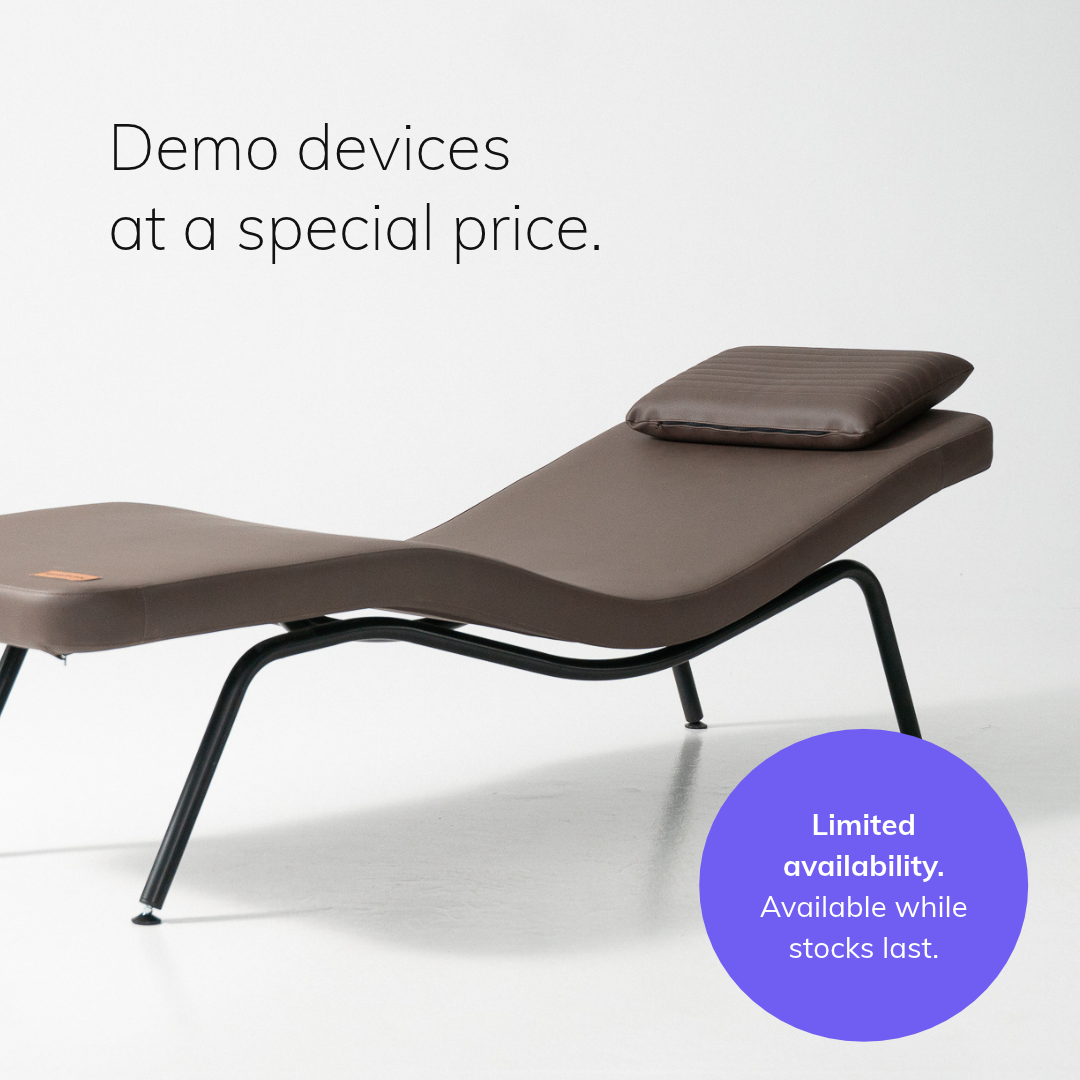
Neurosonic technology produces low-frequency vibration, which is transmitted into the body, for example, through a mattress or another surface in contact with the body.
The vibration does not affect only the sense of touch. The mechanical motion also transfers to body tissues, where cells are able to respond to mechanical stimulation.
This was precisely one of the study's points of interest: what happens when low-frequency mechanical vibration is combined with a vasodilating effect?
The study's results open up a new and interesting research area for Neurosonic technology. However, they do not show that Neurosonic technology alone removes amyloid from the brain, or prevents or treats Alzheimer's disease.
“The most interesting contribution of this study is new knowledge about what happens in the body during low-frequency vibration. We want to understand the physiological effects of the technology better and better, and to be part of research that examines them using scientific methods,” says Neurosonic founder, psychotherapist Marco Kärkkäinen.
Does this mean a new Alzheimer's treatment?
Not yet.
The study observed an interesting biological phenomenon, but there is a long way to go before a new treatment method can be developed.
The study included 29 people, all of them healthy. The study did not examine whether the treatment prevents Alzheimer's disease, improves memory, or reduces the risk of developing the disease.
Nor does the fact that beta-amyloid levels increased in the blood alone show that the risk of Alzheimer's disease in the brain has decreased.
Instead, the results raise the question of whether the brain's natural cleansing process can be influenced, and whether this could one day be useful in preventing or treating age-related brain diseases.
Further research is needed for this.
What's next?
It would be particularly interesting to study the effects in older people, as well as in people with an increased risk of developing memory disorders.
Going forward, researchers also need to determine:
- whether the observed effects are reproducible
- how long they last
- whether the increased transfer of proteins from the brain into the bloodstream has any long-term health significance.
Above all, the study offers a new starting point for research into the brain's cleansing system and the effects of mechanical vibration.
Study in brief
What was studied?
Whether the movement of brain fluids and the clearance of soluble proteins can be enhanced.
Who participated?
29 healthy volunteers, aged 27–61.
What method was used?
A combination of the vasodilating drug nitroglycerin and low-frequency whole-body vibration produced with Neurosonic technology.
What was found?
The concentration of soluble beta-amyloid proteins linked to Alzheimer's disease in the blood increased by more than 30 percent after treatment. Brain MRI scans also showed changes consistent with fluid movement.
What was particularly interesting?
The effect was stronger in older participants.
Does the result mean that Neurosonic prevents or treats Alzheimer's disease?
No. This was not studied or demonstrated in this study.
Source
Vasomechanic treatment increases efflux of human brain proteins
For more information
Juha Suoniemi, CEO
Neurosonic
phone +358 40 763 9674
juha.suoniemi@neurosonic.fi
Neurosonic is a wellness technology company that develops technology based on low-frequency whole-body vibration. Neurosonic solutions are used to support recovery, sleep, and stress management.